Metatarsal Pain
Understanding nerve-related foot conditions and how specialized footwear helps
Common Heel Pain Conditions
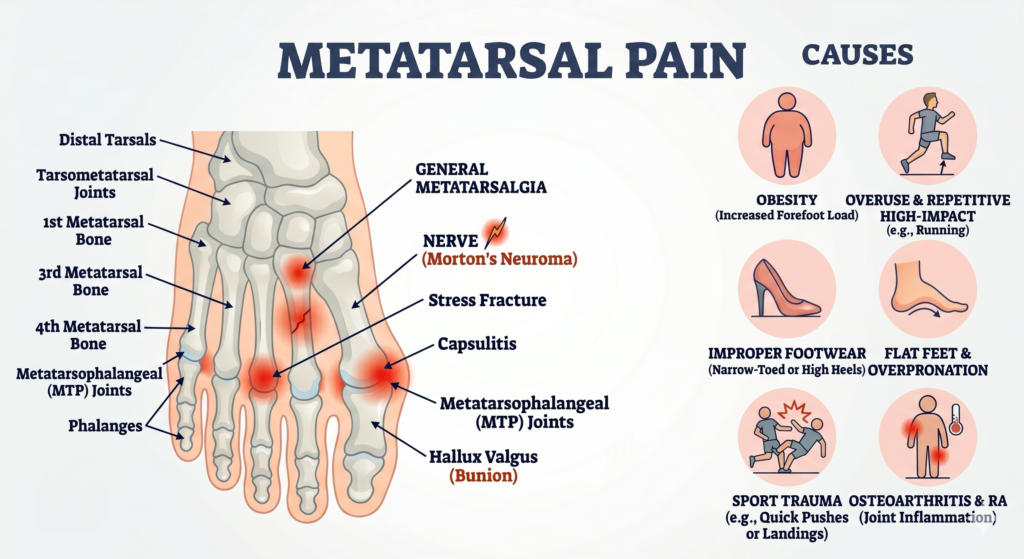
- Capsulitis: This condition involves the inflammation of the joint capsule (the covering that surrounds a joint), most commonly affecting the joint at the base of the second toe.
- Morton’s Neuroma: This is a noncancerous thickening of the tissue surrounding a nerve, typically located between the third and fourth metatarsal heads, which can cause sharp pain, tingling, and a burning sensation.
- Intermetatarsal Bursitis: This refers to the inflammation of a bursa (a small, fluid-filled sac that reduces friction) situated between the joints in the ball of the foot, leading to pain and swelling when weight is applied.
- Plantar Plate Injury: This involves damage or tearing to a strong ligament called the plantar plate; if left untreated, it can cause chronic pain and structural deformity in the affected toe.
- Fat Pad Atrophy: This is the natural thinning and degeneration of the protective fat pad beneath the ball of the foot (often beginning around age 30), which reduces shock absorption and leaves the foot vulnerable to pressure and repetitive micro-trauma.
- Sesamoiditis: This is the inflammation of the sesamoids (two small bones located under the first metatarsal head beneath the big toe), which are prone to stress and overuse injuries.
Metatarsalgia
Pain and inflammation in the ball of the foot caused by excessive pressure on the metatarsal bones.
Morton's Neuroma
A thickening of nerve tissue between the toes, causing burning pain, tingling, or numbness.
Stress Fractures
Tiny cracks in the metatarsal bones caused by repetitive impact, overuse, or intense physical activity.
Sesamoiditis
Inflammation of the small sesamoid bones beneath the big toe, leading to pain in the forefoot area.
Key Symptoms — When to Seek Help?
- Pain in the ball of the foot
- Burning or aching sensation while walking
- Tingling or numbness in the toes
- Swelling or tenderness in the forefoot
- Feeling like walking on a pebble
- Increased pain during standing or physical activities
⚠️ Warning: Neurological issues like Diabetic Peripheral Neuropathy can lead to unnoticed injuries or ulcers. Consult a specialist immediately if you experience persistent numbness.
Specialized Footwear Solutions
- Metatarsal Pads – Help redistribute pressure away from the forefoot.
- Cushioned Insoles – Provide extra shock absorption and comfort.
- Rocker Sole Shoes – Reduce pressure on the ball of the foot during walking.
- Custom Orthotics – Personalized support to improve foot alignment and relieve pain.
- Wide Toe Box Footwear – Reduces compression and irritation around the toes and forefoot.