Limb Length Discrepancy
Understanding nerve-related foot conditions and how specialized footwear helps
Common Causes & Types of Limb Length Discrepancy
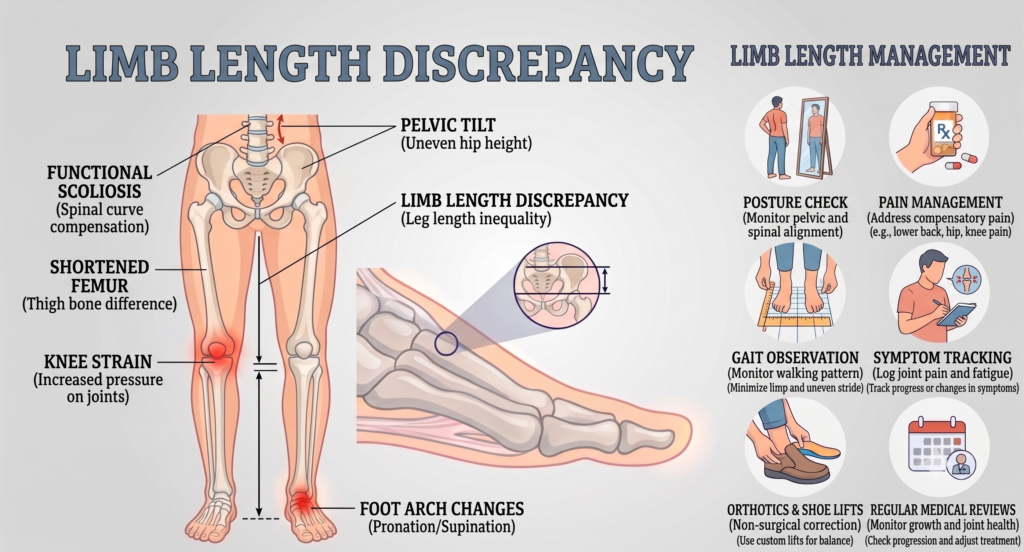
- Structural Discrepancy – A true difference in the length of the leg bones (thigh bone or shin bone).
- Functional Discrepancy – Legs are equal in length but appear uneven due to pelvic tilt, muscle tightness, or scoliosis.
- Congenital Conditions – Present from birth, such as fibular hemimelia or hemihypertrophy.
- Growth Plate Injury – Damage to the growth plate in childhood that slows growth in one leg.
- Fracture Malunion – A broken bone that heals shorter or in a shifted position.
- Bone Infection – Infections such as osteomyelitis that affect normal bone growth.
- Neuromuscular Conditions – Polio or cerebral palsy causing uneven growth or muscle imbalance.
- Post-Surgical Changes – Length changes after joint replacement or other limb surgery.
Structural Discrepancy
A true bone length difference between the two legs, measured in millimetres or centimetres.
Functional Discrepancy
An apparent difference caused by posture, pelvic tilt, or tight muscles rather than bone length.
Pelvic Tilt
The pelvis drops on the shorter side, leading to uneven hips and shoulders.
Compensatory Gait
Walking on tiptoe or bending the knee to make up for the difference, which strains the joints.
Key Symptoms — When to Seek Help?
A noticeable limp or uneven walking pattern.
Uneven hips or shoulders when standing.
Walking on tiptoe on the shorter side.
Bending the knee of the longer leg while walking or standing.
Lower back, hip, or knee pain that keeps returning.
Trousers or skirts that hang unevenly at the hem.
Fatigue or discomfort after short walks or standing.
Visible curvature of the spine in a child, or one leg looking shorter (seek an orthopaedic assessment).
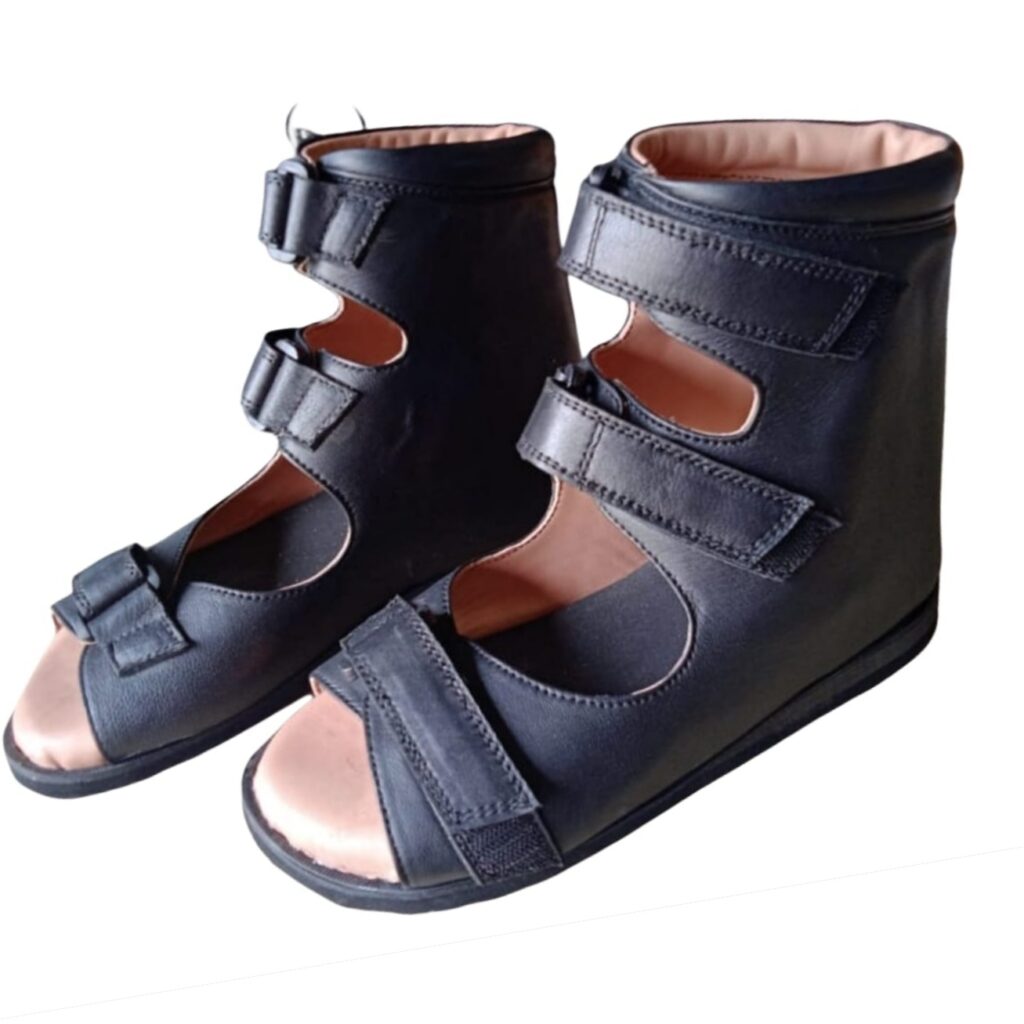
Specialized Footwear Solutions
- Built-Up Sole or Heel Raise - Evens out leg length so the pelvis stays level, as prescribed by your doctor
- Adjustable Shoe Lifts - Allows the correction height to be fine-tuned as needed
- Anatomical Arch Support - Keeps the foot aligned and reduces strain on the joints
- Firm Heel Counter - Stabilizes the ankle and improves balance on the raised side
- Lightweight, Non-Slip Outsole - Reduces the extra weight of the lift and helps prevent falls